
Using smart sensors installed at strategic points throughout a site, intrusion detection systems analyze unusual events and trigger an alert as soon as a potential threat is detected : forced entry, unauthorized entry into a protected area, suspicious movement, or an attempted break-in.
As an integral part of a comprehensive security system, intrusion detection allows you to ensure continuous monitoring of your site, protect people and property, and improve response times in the event of an incident.
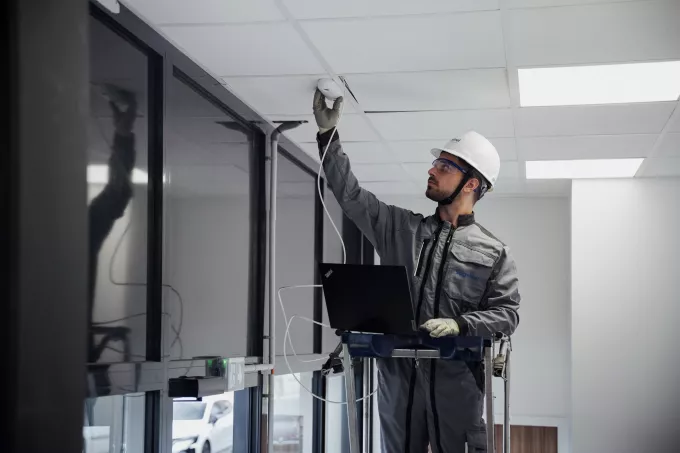
The different kinds of intrusion detection :
- Volumetric detection (infrared detectors, dual-technology detectors, etc.)
- Perimeter detection (infrared barriers, fence-mounted sensors, outdoor sensors)
- Detection of openings and access points
- Alert buttons
- Shock or vibration detection
- Crossing detection
When an alarm is triggered, several actions can be taken :
- Transmission of alarms to our remote monitoring service,
- Audio and video verification,
- Centralized monitoring of events.
As soon as an intrusion is detected, the alert is transmitted in real time to authorized individuals or departments to enable rapid verification and the initiation of appropriate actions.

What is the difference between an intrusion alarm and an intrusion detection system ?
An intrusion alarm is the system that centralizes this information, applies predefined scenarios, and triggers the appropriate actions : alerting users, transmitting data to a monitoring center, verifying the situation, or securing the site. An intrusion detection system comprises all the sensors and devices responsible for identifying an attempted break-in or an unauthorized presence.
How can false alarms be reduced ?
Reducing false alarms depends on a preliminary risk analysis, the appropriate selection of detection technologies, and settings adapted to the environment. The use of dual-technology detectors, cross-referencing information with video surveillance, and regular maintenance all help improve the system’s reliability and guarantee effective detection of actual events.
Why combine intrusion detection with video surveillance ?
Combining intrusion detection with video surveillance allows for the rapid qualification of an event through video verification. This complementary approach improves team responsiveness, reduces unnecessary responses, and facilitates decision-making by providing a visual context that can be immediately analyzed.
What is the benefit of connecting to a remote monitoring center ?
Connecting to a remote monitoring center ensures continuous monitoring of alarms, even outside of business hours. Operators follow predefined procedures, verify the cause of the alarm using available resources, and take the appropriate actions based on the nature of the event.
Why Choose NF A2P-Certified Equipment ?
NF A2P certifications attest to the equipment’s performance in terms of reliability, resistance to vandalism and operational continuity. They serve as a reference standard recognized by security professionals and help meet the requirements of many insurers as well as the constraints of high-risk or sensitive sites. Eryma’s intrusion detection solutions are NF A2P certified.